

Local businesses face a unique challenge online. Competing against national brands with unlimited budgets is not realistic, and it is also not necessary. What works far better is a focused approach built around the community you actually serve.
This blog breaks down why localized social media marketing matters, how it works, and what steps you can take to make it successful for your business.
What Is Localized Social Media Marketing?
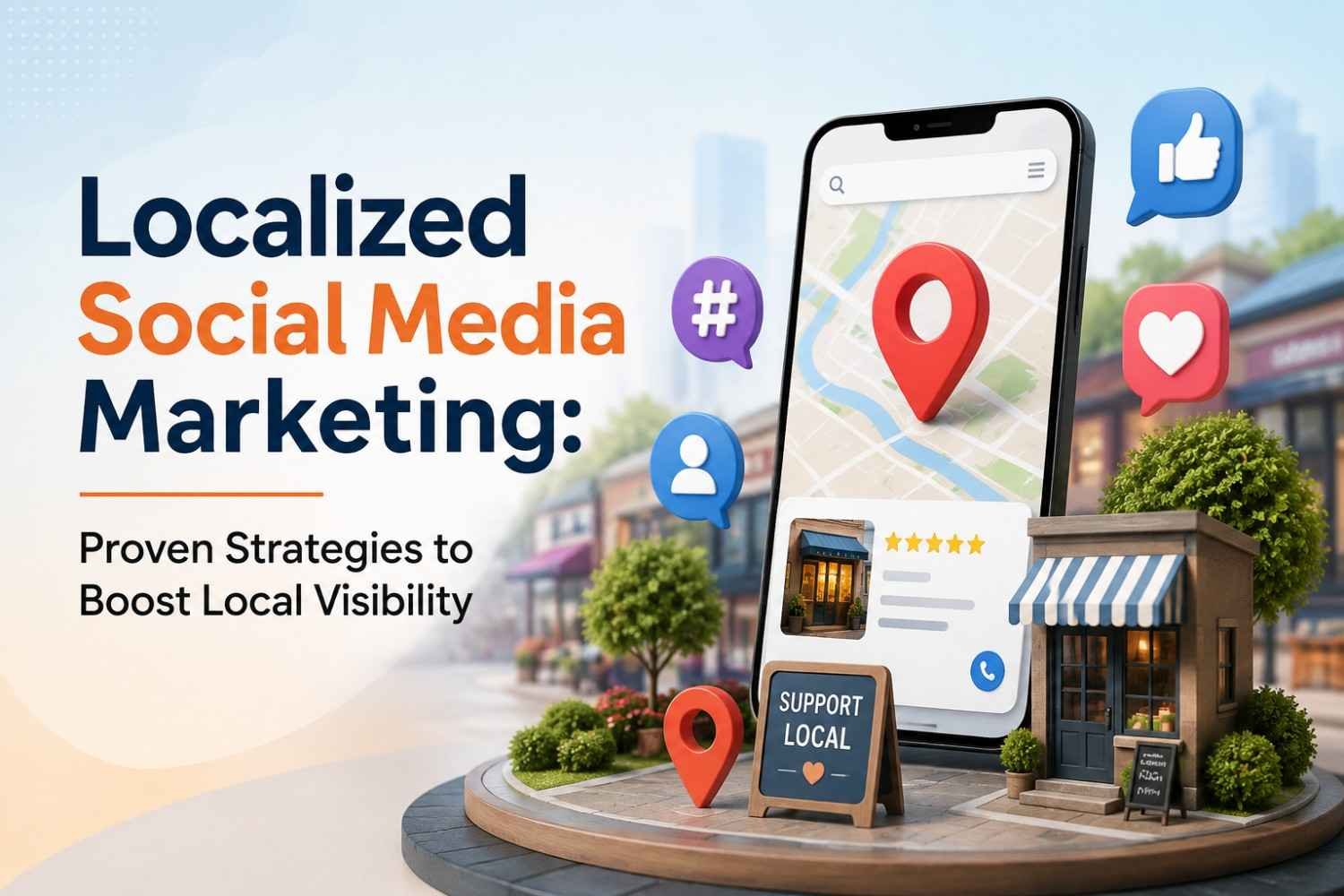
Localized social media marketing refers to tailoring your social content, targeting, and engagement to a specific city, neighbourhood, or region. Instead of broadcasting generic messages to a wide audience, businesses focus on the people most likely to walk through their door or use their service.
This includes location-based hashtags, geo-targeted ads, community events, and content that reflects local culture and interests.
Businesses that rely on nearby customers, such as restaurants, clinics, salons, and retail shops, benefit the most from this approach. A strong local social media strategy allows these businesses to stand out in a crowded feed by speaking directly to the people who matter most to their bottom line.
Proven Strategies for Localized Social Media Marketing
Building a successful local presence takes more than posting occasionally. A well-planned mix of tactics helps businesses gain steady traction with localized marketing over time. Here are strategies that consistently produce results.
1. Use Location-Based Hashtags and Tags
Adding city or neighbourhood hashtags helps your content surface in local searches. Tagging your business location on every post also improves discoverability, particularly on platforms like Instagram and Facebook.
2. Engage With Local Community Pages and Groups
Joining and actively participating in community groups builds credibility. Businesses that consistently show up in these spaces are viewed as trusted local resources rather than outside advertisers.
3. Highlight Local Events and Partnerships
Sharing content about local events, sponsorships, or collaborations with nearby businesses strengthens your presence within the community. This type of content performs well because it feels authentic and relevant.
4. Run Geo-Targeted Ad Campaigns
Paid social ads can be filtered by radius, city, or postal code. This ensures your budget is spent reaching people who are actually within reach of your business, rather than wasting money on audiences too far away to convert.
5. Encourage Local Reviews and User-Generated Content
Customer reviews and tagged photos from local patrons act as social proof. Sharing this content builds trust with other potential customers in the same area.
Building a Local Social Media Strategy That Works
A scattered posting schedule rarely produces results. A clear local social media strategy starts with understanding your audience, choosing the right platforms, and setting a consistent content calendar built around local relevance.
Start by identifying which platforms your local customers actually use. Instagram and Facebook tend to work well for retail and hospitality businesses, while LinkedIn may suit local B2B services better. From there, plan content around local seasons, events, and community interests rather than generic industry trends.
The Role of a Local Social Media Marketing Agency
Managing this consistently takes time, and many business owners simply do not have the bandwidth to do it well while running daily operations. This is why many businesses choose to work with a local social media marketing agency that understands the nuances of their specific market.
An experienced agency brings structure to your content, manages ad spend efficiently, and tracks performance to refine strategy over time.
Rather than guessing what works, a professional team uses data to guide every decision, ensuring your budget delivers measurable results.
Choosing Between Local Social Media Marketing Companies
Not every provider offers the same level of expertise. Some local social media marketing companies focus purely on posting content without a broader strategic plan, while others take a more comprehensive approach that includes audience research, ad management, and performance reporting.
When evaluating a partner, look for a team that asks questions about your customers, your competitors, and your local market before jumping into content creation.
This groundwork is what separates effective social media marketing from generic, one-size-fits-all posting.
Measuring Success in Localized Social Media Marketing
Tracking the right metrics is essential to understanding whether your efforts are working. Engagement rates, follower growth within your target area, website clicks, and in-store visits attributed to social campaigns all provide useful insight.
Regularly reviewing this data allows you to adjust your social media marketing approach as needed. What works during one season or campaign may need refinement later, so ongoing analysis keeps your strategy sharp and results-driven.
Common Mistakes to Avoid
Many businesses make the mistake of treating social media as a broadcast channel rather than a conversation. Posting without engaging with comments, messages, or local mentions weakens the connection you are trying to build.
Another common mistake is neglecting to localize content at all, relying instead on generic posts that could apply to any business in any city. Effective localized social media marketing requires content that feels specific to the community it is meant to reach.
Bringing It All Together
A strong local presence on social media does not happen by accident. It requires a deliberate combination of location-based targeting, community engagement, and consistent content that reflects the audience you serve.
Businesses that commit to a thoughtful localized social media marketing approach consistently see stronger local visibility and better customer relationships over time.
If managing this in-house feels overwhelming, partnering with professionals who understand your market can make the process far more effective.
The Bottom Line
Strong local visibility starts with a strategy built for your community, not a generic template. The Web Tenacity helps businesses create and manage effective social media campaigns designed to connect with local customers and drive real results.
Reach out to The Web Tenacity today to build a social media strategy tailored to your market.
Frequently Asked Questions
How do I execute a localized social media plan?
Start by identifying your target neighbourhoods or cities, then research which platforms your local audience uses most. Build a content calendar around local events, hashtags, and community interests. Use geo-targeted ads to reach nearby customers, and track engagement and conversions regularly to refine your approach over time.
How is local social media marketing different from regular social media marketing?
Regular social media marketing often targets a broad or national audience, while localized efforts focus specifically on a defined geographic area. This includes location tags, regional hashtags, and content tailored to local culture and events, resulting in stronger engagement from nearby customers.
Which platforms work best for local social media marketing?
Instagram and Facebook typically perform well for retail, hospitality, and service-based businesses due to their strong local discovery features. LinkedIn can be effective for local B2B businesses, while platforms like TikTok are growing in popularity for community-driven local content.
Is it worth hiring a local social media marketing agency instead of managing it in-house?
For many businesses, yes. An agency brings market research, ad management expertise, and consistent execution that busy owners often cannot maintain alone. This typically results in better engagement and a stronger return on investment.
How long does it take to see results from a localized social media strategy?
Most businesses begin seeing engagement improvements within four to eight weeks, though stronger conversion results, such as increased foot traffic or leads, often develop over three to six months of consistent effort.