


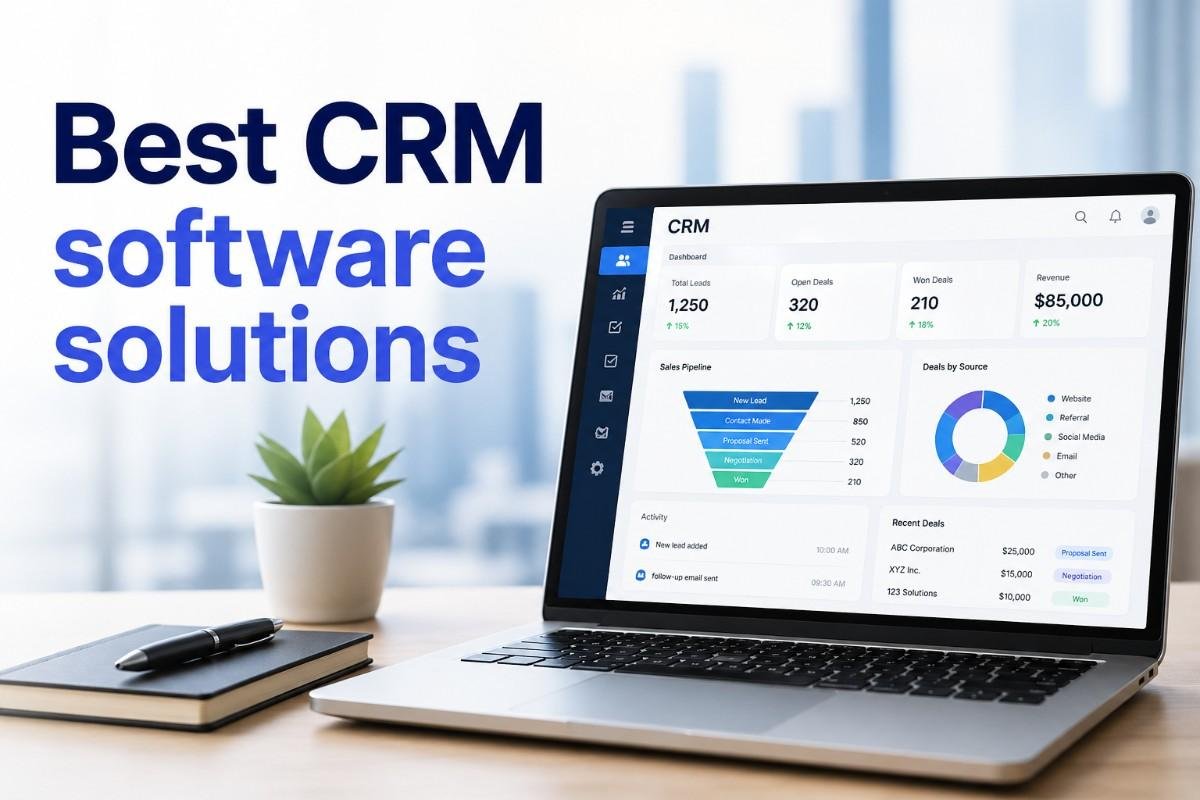
Running a business in Canada is now harder than ever. If you don’t have a proper system, your business might fall apart sooner or later. You need the best CRM software solutions to close more deals, build concrete relationships, and scale faster. However, with so many options out there, it’d be hard for you to choose one. This blog will give you clear steps to choose the right tool for your business. Start reading.
What Is CRM Software and Why Does It Matter?
Customer relationship management software is a tool that helps businesses manage interactions with current and potential customers. It tracks every call, email, and deal. Here’s why Canadian businesses need it:
- To keep your sales pipeline organized
- To reduce manual follow-ups
- To improve team collaboration
- To give you data to make smarter decisions
How a Digital Marketing Agency in Canada Uses CRM to Drive Growth
You might wonder, what does a CRM have to do with marketing? Everything. A digital marketing agency in Canada uses CRM tools to track campaign leads, measure ROI, and personalize outreach. When your CRM connects with your marketing stack, every campaign becomes smarter.
Here’s what that looks like in practice:
- A lead clicks your Google Ad and fills out a form
- Your CRM captures their details instantly
- Your team gets notified and follows up within minutes
- The deal is tracked from first contact to close
Learn More about how top digital marketing companies in Canada can drive your business growth in 2026.
Key Features to Look for in the Best CRM Software in Canada
Not every CRM is built the same. Before you buy, know what to look for. Here are the must-have features when evaluating the best CRM software in Canada:
1. Contact and Lead Management: Your CRM should store every contact, log every interaction, and show you where each lead stands in the pipeline. Simple, clean, and accessible.
2. Automation: Look for CRM tools for businesses that automate repetitive tasks (follow-up emails, task reminders, and deal stage updates). This saves hours every week.
3. Reporting and Analytics: Data matters. Your CRM should show you conversion rates, deal velocity, and team performance — not just raw numbers, but insights you can act on.
4. Integration Capabilities: Does it connect with your email, calendar, marketing tools, and website? The best CRM software solutions work with your existing stack, not against it.
5. Mobile Access: Your sales team is on the move. Choose a CRM with a strong mobile app so no deal gets missed.
6. Scalability: Start small, but think big. The right top CRM software grows with your business without forcing you to switch platforms later.
Types of CRM Software Providers in Canada
There’s no one-size-fits-all solution. Different businesses need different types of CRMs. Here’s a quick breakdown:
- Operational CRMs: Automate sales, marketing, and service workflows. Best for businesses focused on process efficiency.
- Analytical CRMs: Focus on data and reporting. Best for teams that make decisions based on customer behavior.
- Collaborative CRMs: Designed to share customer data across departments. Best for larger teams with multiple touchpoints.
Understanding your business model helps you narrow down the right type of CRM software providers before you start comparing prices.
How to Evaluate the Best CRM Software Solutions for Your Needs
Here’s a simple framework. Use it before signing any contract.
- Step 1 — Define Your Goals: What problem are you solving? More leads? Better follow-ups? Improved team visibility? Write it down. Your goals should drive your CRM choice.
- Step 2 — Map Your Sales Process: Before you pick a tool, understand your workflow. How does a lead enter your system? Who handles it? How many touchpoints are there before a sale? The best CRM software solutions should mirror your process, not change it.
- Step 3 — Set Your Budget: CRMs range from free to enterprise-level pricing. Don’t overspend on features you won’t use. Start with core functionality and upgrade as you grow.
- Step 4 — Test Before You Commit: Most top CRM software platforms offer free trials. Use them. Get your team involved. A CRM that nobody uses is a waste of money.
- Step 5 — Check Support and Training: Implementation matters. Look for CRM software providers that offer onboarding, tutorials, and responsive customer support. A smooth launch means faster results.
Common Mistakes Businesses Make When Choosing a CRM
Avoid these before you invest:
- Choosing based on price alone: Cheap CRMs often lack key features. Focus on value, not just cost.
- Ignoring user adoption: If your team finds it hard to use, they won’t use it. Simplicity matters.
- Skipping integration checks: Make sure it connects with your email, calendar, and marketing tools.
- Buying more than you need: Feature overload slows teams down. Start lean.
- Not aligning with your sales process: A CRM should fit how you work, not the other way around.
Why the Right CRM Pairs Perfectly With Digital Marketing
A CRM is only as powerful as the data that flows into it. That’s why pairing it with a strong marketing strategy matters. When you work with a trusted digital marketing agency like The Web Tenacity, your CRM becomes a growth engine. Here’s what a connected approach looks like:
- SEO and content bring in qualified leads
- Your CRM captures and tracks those leads automatically
- Your sales team follows up with full context
- Marketing uses the data to refine future campaigns
How to Choose the Right CRM: A Quick Checklist
Here, we’re making things simpler for you. Before you decide, run through this:
- Does it fit your sales process?
- Can your team learn it quickly?
- Does it integrate with your existing tools?
- Does it offer reporting you’ll actually use?
- Is the pricing transparent and scalable?
- Does the vendor offer solid support?
The Bottom Line
The best CRM software solutions won’t just organize your contacts. It will help your team close faster, serve customers better, and scale smarter. Canada’s business landscape is growing. The businesses that invest in the right CRM software today will be the ones leading their industries tomorrow.
Start by defining your goals. Test a few platforms. And if you need a digital partner to help you connect your CRM to a broader growth strategy, The Web Tenacity is built for exactly that.
Frequently Asked Questions
1. What are the best CRM software solutions for small businesses in Canada?
Small businesses should look for CRMs that are easy to use, affordable, and scalable. Focus on tools that offer automation, lead tracking, and integration with email and marketing platforms.
2. How do the best CRM software solutions help with digital marketing?
Customer relationship management software captures leads from marketing campaigns, tracks customer behavior, and helps teams follow up at the right time. It makes marketing more targeted and measurable.
3. What should I look for in CRM tools for businesses?
Prioritize ease of use, automation features, mobile access, reporting, and integration capabilities. The best CRM tools for businesses align with your existing sales workflow.
4. Are there free CRM options available in Canada?
Yes. Several platforms offer free tiers. However, as your business grows, you’ll likely need paid features. Start free, then scale when needed.
5. How long does it take to implement a CRM?
It depends on your team size and complexity. A simple setup can take a few days. A full enterprise rollout may take weeks. Always factor in onboarding and training time.